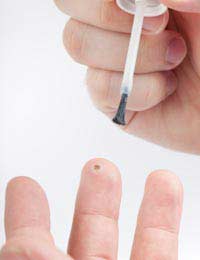
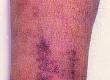
Often called “middle-aged warts”, seborrheic keratoses are small growths that appear on the skin often around middle age, although sometimes before. Completely harmless, they are never cancerous, but are not always attractive.
Nobody knows exactly why some people get seborrheic keratoses, or why some people get only a few growths while others get hundreds.
While genetics definitely play a role, other contributors to these barnacle-like lesions are hormones and excessive exposure to the sun’s rays. They sometimes occur, for example, as the result of pregnancy or oestrogen therapy.
Characteristic Appearance
Seborrheic keratoses are usually flat or sometimes raised, and brown in appearance. They look like a wart or small barnacle attached to the skin, and they often appear in specific parts of the body only.
A common place for them to make an appearance is the trunk and back, and when they appear on the face they usually show up near the temples.
They can be tan, brown or black, and while they start out as small, white bumps they can grow bigger and bigger. They look almost as if they are pasted onto the skin, and if they run in your family, you have a good chance of developing them.
Treatment Options
Some people who have seborrheic keratoses may opt for treatment, which could involve one of several options:
Freezing (cryosurgery). Using liquid nitrogen to freeze off the keratoses is usually the best option. The result of this treatment will depend, in part, on the skill of the doctor or dermatologist performing the treatment. Often, a small, whitish scar will remain, which may be preferable to the keratosis itself.
Shaving (curettage). Some people like to have the keratosis literally shaved off, which will be done by a professional. Aftercare will be needed to prevent infection. The area can be numbed beforehand with a local anaesthetic if required.
Electrocautery. This involves burning the keratosis off with an electric current, and can leave a scar when done by someone who is not skilled in the area.
Lasers. This is rare and not usually recommended, and a resurfacing or Co2 laser would be needed.
If you have hundreds of seborrheic keratoses, you may opt to have just ones that are particularly large or in highly prominent areas removed. Please note that many NHS doctors will not see the need for this, as this treatment is considered purely cosmetic.
If the keratoses really bother you, however, either emotionally or physically (they may be directly in your bra-line, for example, and rub when you are wearing a bra) then you may have legitimate grounds to have them removed on the NHS free of charge. Alternatively, you may decide to go private.
Sometimes seborrheic keratoses itch. If this is the case, you may simply be prescribed a special anti-itching cream or moisturiser to make you more comfortable.
Keeping Close Watch
Occasionally, a seborrheic keratosis may turn black in colour, bleed or change in appearance. If that happens, you should see your GP as soon as possible to make sure it really is a keratosis and not a melanoma, which is a dangerous form of skin cancer.
Melanomas can resemble seborrheic keratoses, so have anything that looks unusual looked at by your GP to rule out whether it is cancerous, if only for peace of mind.
Remember, however, that a true seborrheic keratosis may be unsightly, but will never be a cause for health concern. There are far worse problems to have!
The vast majority of people will have at least one seborrheic keratosis in their life. If they are irritated by the clothes you wear or by jewellery, if they itch regularly or if you have many of them, which bother you for cosmetic reasons, then make an appointment to see your GP.
Business Energy With a Difference
If you are looking for business energy or need advanced solutions like remote energy monitoring, new supplies, downgrading or upgrading capacity, have a no obligation chat with Purely Energy.
I have a sebbhoraic keratosis directly under my left eye. It is slowly growing and is currently about almost a centimetre in diameter. I was referred to a dermatologist by my doctor a year ago. I was refused treatment by NHS at this appointment on the grounds that it is purely cosmetic.
However, this wart is ugly and is getting uglier and it is hard enough growing older as a woman (now 66) without having a big blemish where every persons eye is drawn to it. I am fed up with the concerned queries concerning what is wrong with my eye.If I was a younger woman I have no doubt it would have been removed as it obviously has an effect on my confidence and self image.
It itches and gets sore from time to time, usually followed by growth. I find it hard to believe that something for which the treatment is fairly simple should just be left when it bothers me so much. Believe it or not older women do not suddenly give up on themselves and not care about the way they look. To me it not just cosmetic or just vanity.To have it removed would be a real weight off my mind.
Summerbreeze - 3-Aug-19 @ 12:23 AM
It may be interesting to add that seborrheic keratoses might herald certain gastrointestinal malignancies. It's called the Leser-Trélat sign.
comrade999 - 21-Jun-19 @ 10:37 PM
I have some I would like removed. Some are uncomfortable and catch on clothing. I live in the UK, and have been told the NHS won't fund it. I can't afford private treatment, so is there a way I can treat it myself?
Mai - 11-Apr-17 @ 3:05 PM
His.I'm in day surgery to have removal of this on my face...been frozen off twice and sort of cut off by doctor....I've heard I will be needled to numb feeling. What happens and how do they do it please
Felixmum26 - 18-Feb-17 @ 2:03 PM
Festie - Your Question:
I have hundreds of seborrheic keratosis on my chest, torso and back, I have had over 200 removed with liquid nitrogen cryosurgery but they just keep coming back. I have now made the decision, with the dermatologist, that I am wasting her time treating a condition that is not life threatening but I will return once a year to have them checked and to remove any that are causing a problem. However, I have some on my eyelids which are itchy and I wonder what would be the treatment for them as they are obviously in a very sensitive area?
Our Response:
Much the same really, surgical removal will be curative. You should see your GP for suggestions.
SkinHelp - 22-Oct-15 @ 12:03 PM
I have hundreds of seborrheic keratosis on my chest, torso and back, I have had over 200 removed with liquid nitrogen cryosurgery but they just keep coming back. I have now made the decision, with the dermatologist, that I am wasting her time treating a condition that is not life threatening but I will return once a year to have them checked and to remove any that are causing a problem. However, I have some on my eyelids which are itchy and I wonder what would be the treatment for them as they are obviously in a very sensitive area?
Festie - 21-Oct-15 @ 10:59 AM
@Kuppu - I'm afraid we cannot give medical advice. You would have to see your doctor about this problem if you are concerned.
SkinHelp - 1-Jun-15 @ 12:09 PM
Dear Doctor,I have one Seborheic Keratosis past 4 years on left side of head near raat ie left temporal region size 2 cm approximate, black and 2mm thick. No itches. Now I shown to doctor and suggested for exision surgery follows biopsy. I am worried about, please advice.Yours TrulyKuppusamy Ekambaram,Male, Indian, Age 49 Lives in Goa, India. Ph no
Kuppu - 28-May-15 @ 6:59 AM
@Brussell sprout - I'm sorry to hear of your discomfort. Unfortunately, as the article specifies they are generally considered cosmetic. However, if the keratoses really bother you, however, either emotionally or physically (they may be directly in your bra-line, for example, and rub when you are wearing a bra) then you may have legitimate grounds to have them removed on the NHS.
SkinHelp - 29-Jan-15 @ 11:45 AM
I have hundreds of unsightly seborrheic keratoses blemishes all over my back, some arelarge and black . I am getting to the pointthat I am embarrassed to go swimming .I had some frozen but the nurse says that I cannot get treatment on the NHS.